Space Planning: Everything in One Place
We developed software for Audi AG to support internal office and process space planning. The “space planning tool” maps out a standardized workflow and provides the planning team with tailored support. By using this software, Audi is contributing to the digitalization of its internal administrative structures.
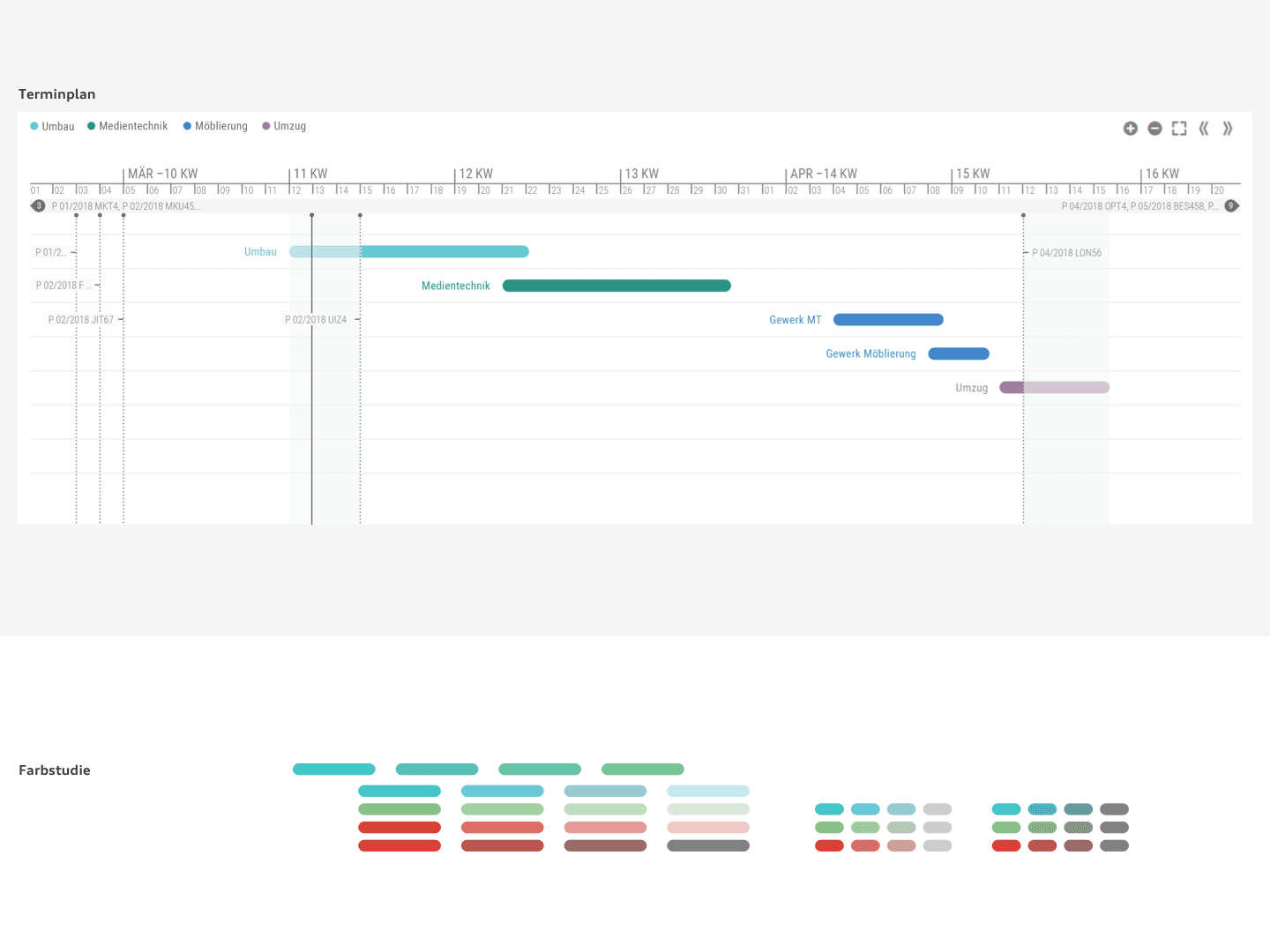
Efficient Relocations with the ‘Space Planning Tool’
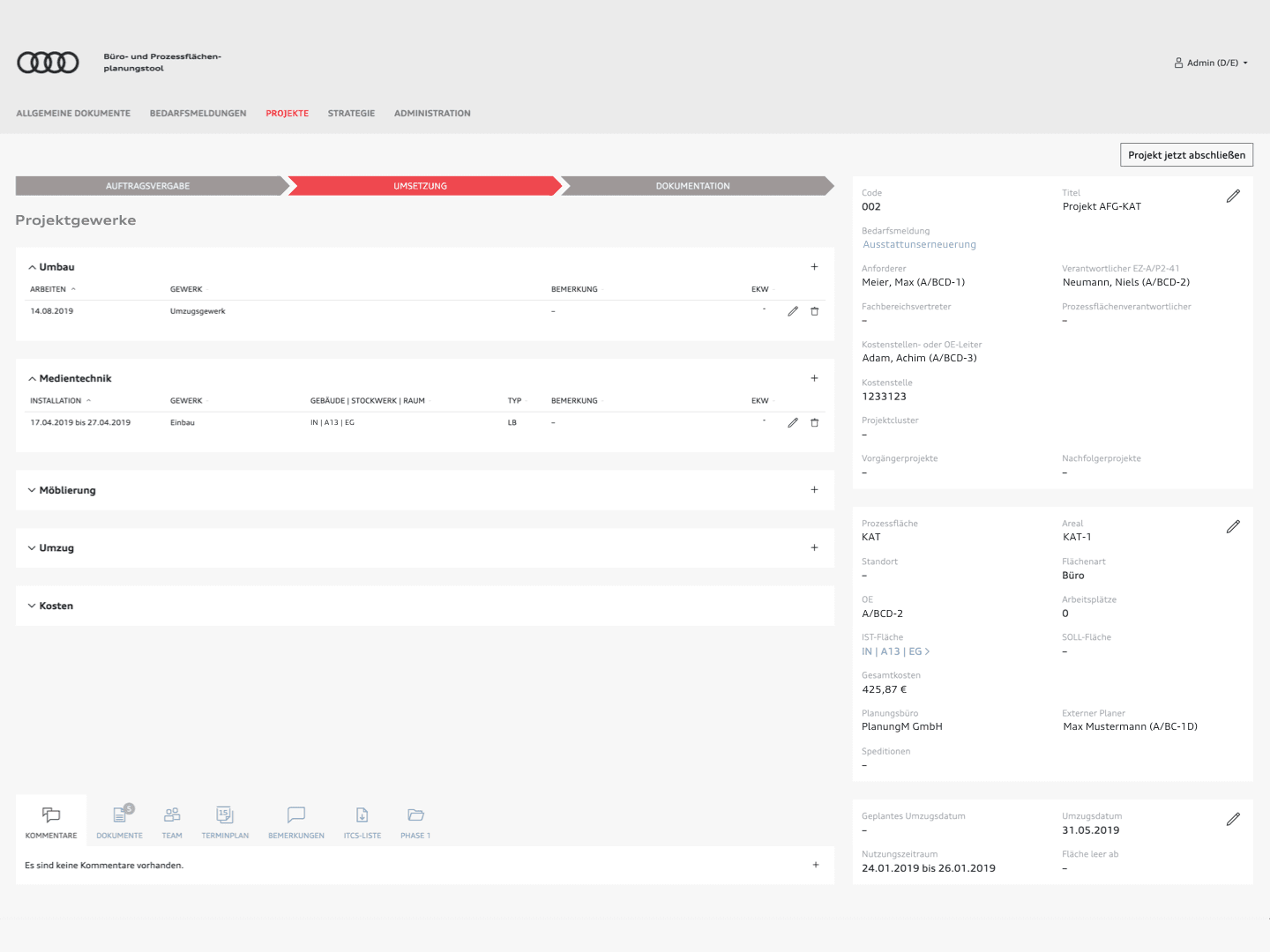
Thanks to customized software for renovation and relocation processes, existing resources can be optimally utilized for project execution. The tool helps stakeholders work together seamlessly and keep track of project progress. Relevant data is consolidated from various sources, and approved renovation and relocation measures are recorded.
The application monitors and documents operational projects related to office space and process area planning—whether it involves additional office chairs or the furnishing of an office building.
Everything at a glance with the ‘Space Planning Tool’
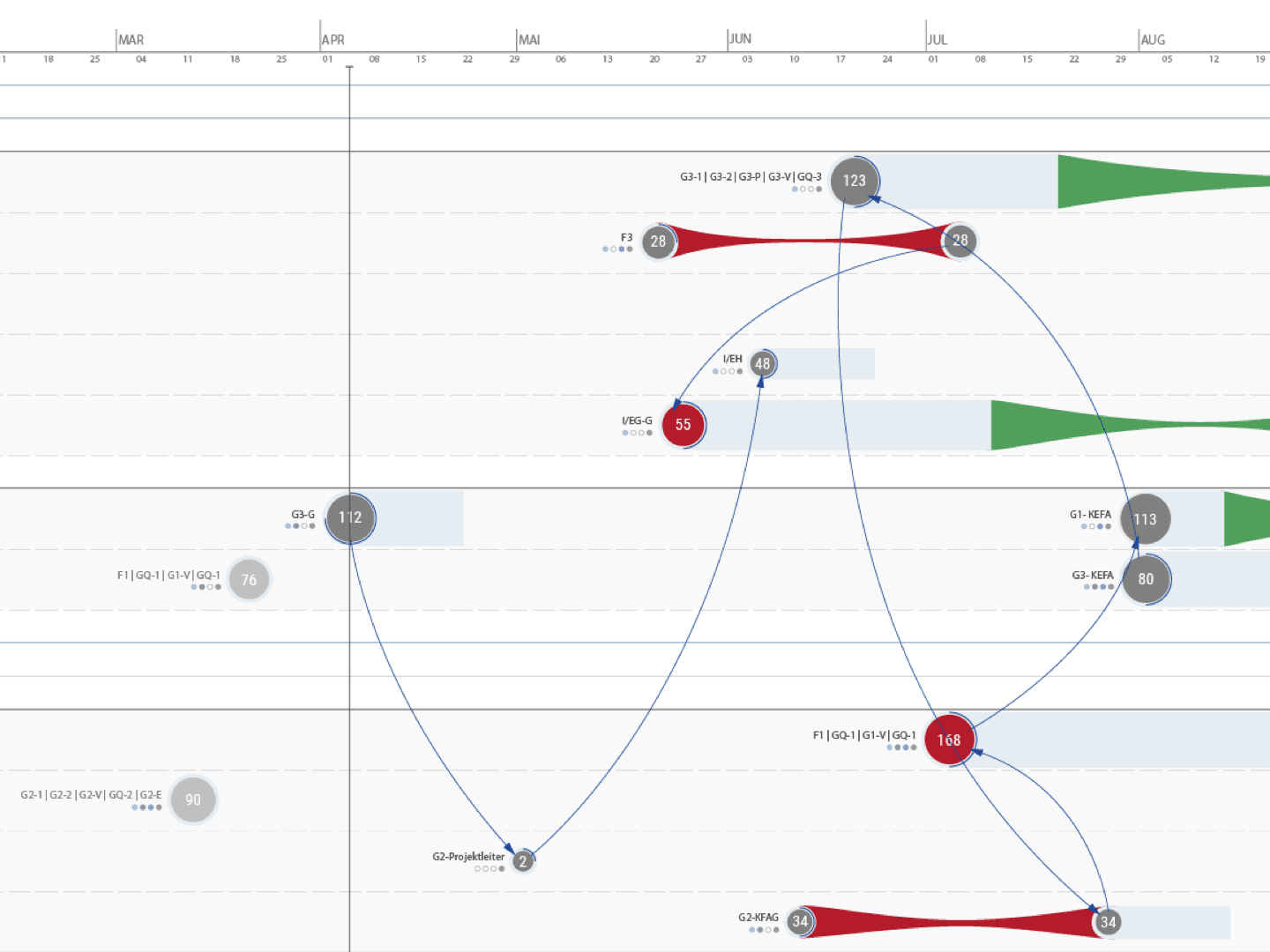
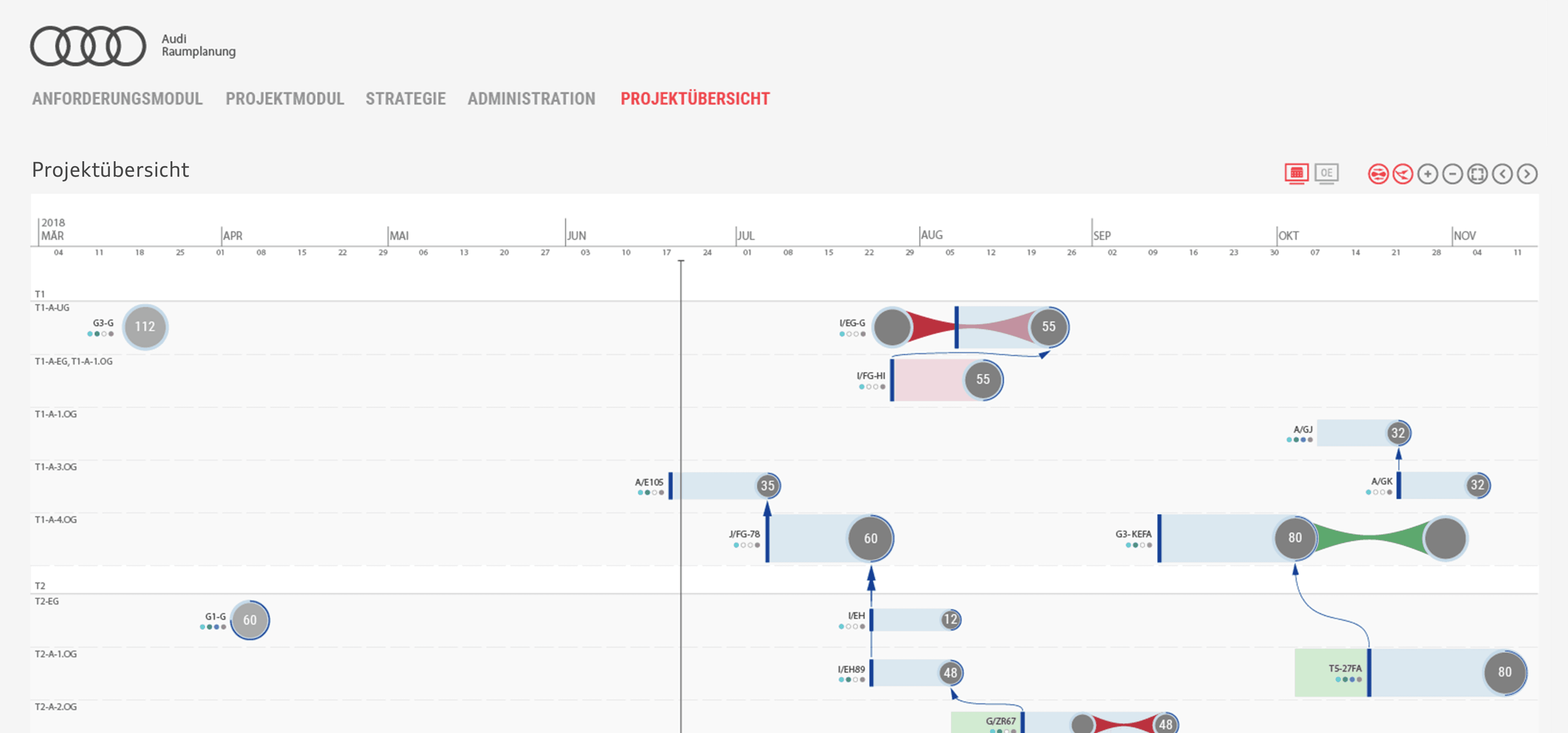
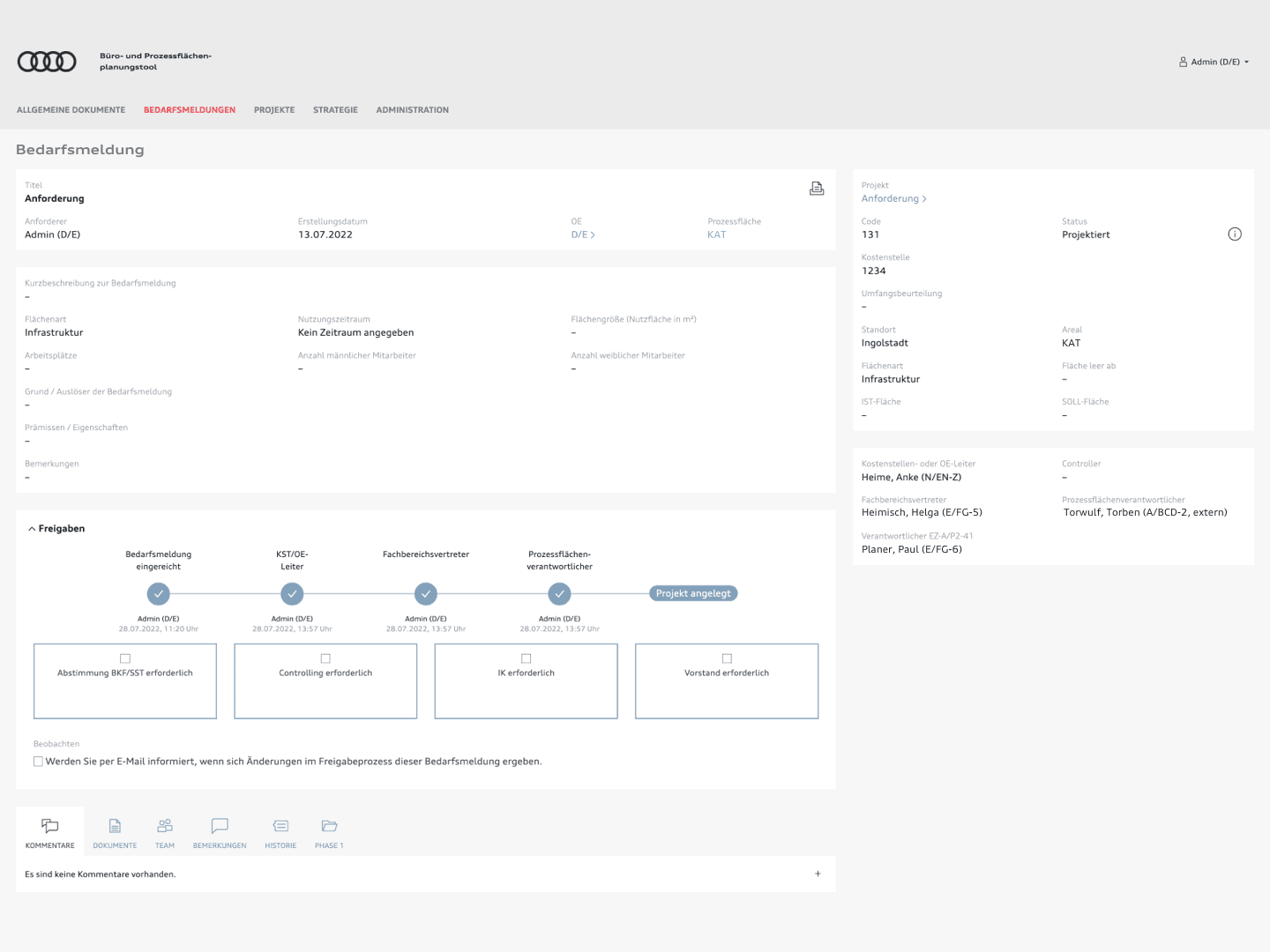
In preparation for development, we conducted workshops to analyze the requirements for the software. We designed the application so that nothing can be overlooked thanks to a uniform structure, such as necessary requirements, contact persons, or status. Clearly structured views of needs, plans, and implementations allow the current project status to be quickly identified. Strategically used visualizations, such as a list of all projects, provide an overview and highlight connections and dependencies.
Integrated notification features and progress indicators were also important, ensuring that team members are always kept informed about their tasks or any changes. This allows them to monitor the impact on other projects and, for example, adjust deadlines in a timely manner.
The user interface enables users to interact with and control the system. Based on the results of the conceptualization and design phases, we implement the front end. Using proven testing methods, we ensure that all designs are implemented correctly and ultimately deliver a production-ready user interface.
User-centered design of interaction options ensures an intuitive user interface. Through interaction design, we define and shape the behavior of interactive applications across various usage scenarios, based on intuitive navigation, with the goal of delivering an outstanding user experience. We describe the dialogue between humans and systems in all its facets.
This analysis identifies the capabilities and characteristics of a desired product. We determine these by comprehensively capturing, specifying, and structuring the requirements within the context of use. Together with the product’s stakeholders, we develop specific and validated documentation of the product requirements. This enables all parties involved to share a common understanding of the goals and requirements of a solution.
Different technologies are suitable for different use cases and application areas. Drawing on our extensive expertise with numerous frameworks and libraries, we evaluate suitable underlying technologies and select the appropriate ones for implementation. The result is a technology stack tailored to the future application.
Handling Large Volumes of Data
For the 'Spatial Planning Tool', we leveraged our expertise in data analysis and integration. The challenge was to tap into a wide range of data sources and ensure a continuous, consistent flow of data—while adhering to the highest security standards.
The data provided is integrated into the application and the depicted workflow as usage-based information in a targeted manner. Users can focus entirely on their tasks, as only data relevant to them is displayed.
A database system is required for data backup and management. We define the data storage model and select a suitable database management system. Based on this, we develop the necessary data structures and implement them in the database management system.
The primary goal of data analytics is to extract valuable insights from existing data. Using methods and algorithms from descriptive, exploratory, predictive, and prescriptive data analysis, we identify patterns in both structured and unstructured data. We provide the models needed to perform these analyses. The insights gained can be used, among other things, to make predictions, uncover correlations, and provide decision support.